Showing posts with label World. Show all posts

Monday, 30 January 2012

Cornwall, England

Cornwall is a unitary authority and ceremonial county of England, within the United Kingdom. It is bordered to the north and west by the Celtic Sea, to the south by the English Channel, and to the east by the county of Devon, over the River Tamar. Cornwall has a population of 537,400 and covers an area of 3,563 km2 (1,376 sq mi). The area now known as Cornwall was first inhabited in the Palaeolithic and Mesolithic periods. It continued to be occupied by Neolithic and then Bronze Age peoples, and later (in the Iron Age) by Brythons with distinctive cultural relations to neighbouring Wales, Ireland and Brittany. There is little evidence that Roman rule was effective west of Exeter and few Roman remains have been found.Historically tin mining was important in the Cornish economy, becoming significant during the Middle Ages and expanding greatly during the 19th century when rich copper mines were also in production. In the mid-nineteenth century, however, the tin and copper mines entered a period of decline. Subsequently china clay extraction became more important and metal mining had virtually ended by the 1990s. Cornwall is the traditional homeland of the Cornish people and is recognised as one of the Celtic nations, retaining a distinct cultural identity that reflects its history.

Images:


Saturday, 14 January 2012

Yosemite National Park, USA


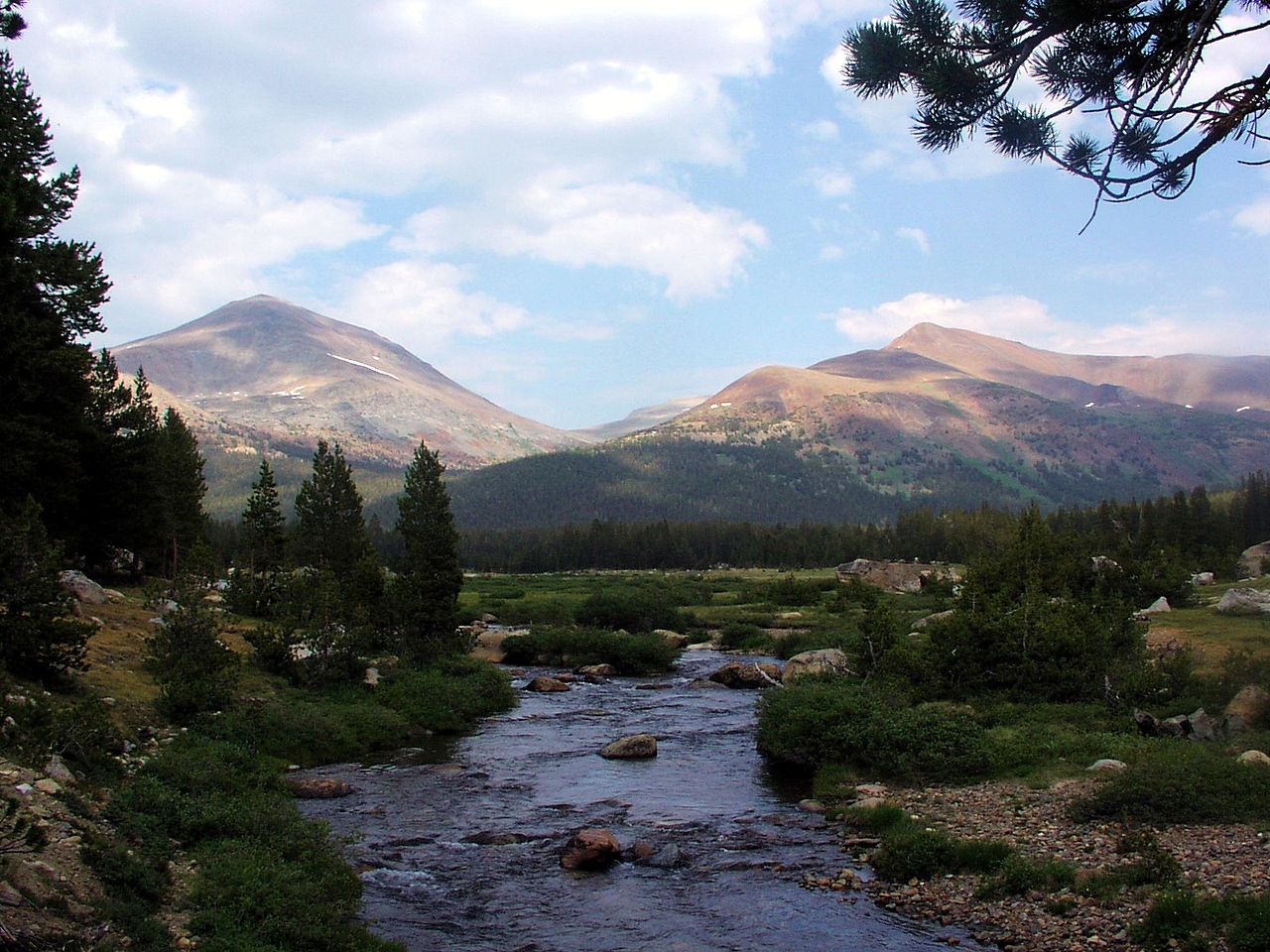
Yosemite National Park is a United States National Park spanning eastern portions of Tuolumne, Mariposa and Madera counties in east central California, United States. The park covers an area of 761,268 acres (3,080.74 km2) and reaches across the western slopes of the Sierra Nevada mountain chain. Over 3.7 million people visit Yosemite each year: most spend their time in the seven square miles (18 km2) of Yosemite Valley.Designated a World Heritage Site in 1984, Yosemite is internationally recognized for its spectacular granite cliffs, waterfalls, clear streams, Giant Sequoia groves, and biological diversity. Almost 95% of the park is designated wilderness. Although not the first designated national park, Yosemite was central to the development of the national park idea, largely owing to the work of people like Galen Clark and John Muir.

Yosemite is one of the largest and least fragmented habitat blocks in the Sierra Nevada, and the park supports a diversity of plants and animals. The park has an elevation range from 2,127 to 13,114 feet (648 to 3,997 m) and contains five major vegetation zones: chaparral/oak woodland, lower montane, upper montane, subalpine, and alpine. Of California's 7,000 plant species, about 50% occur in the Sierra Nevada and more than 20% within Yosemite. There is suitable habitat or documentation for more than 160 rare plants in the park, with rare local geologic formations and unique soils characterizing the restricted ranges many of these plants occupy.
The geology of the Yosemite area is characterized by granitic rocks and remnants of older rock. About 10 million years ago, the Sierra Nevada was uplifted and then tilted to form its relatively gentle western slopes and the more dramatic eastern slopes. The uplift increased the steepness of stream and river beds, resulting in formation of deep, narrow canyons. About 1 million years ago, snow and ice accumulated, forming glaciers at the higher alpine meadows that moved down the river valleys. Ice thickness in Yosemite Valley may have reached 4,000 feet (1,200 m) during the early glacial episode. The downslope movement of the ice masses cut and sculpted the U-shaped valley that attracts so many visitors to its scenic vistas today.

Images:


Saint Petersburg, Russia


Keywords: Saint Petersburg, Russia, Hot pictures, amazing pictures, world pictures, adventure pictures, nature pictures, places, pictures.
Saint Petersburg  is a city and a federal subject (a federal city) of Russia located on the Neva River at the head of the Gulf of Finland on the Baltic Sea. In 1914 the name of the city was changed to Petrograd, in 1924 to Leningrad  and in 1991 back to Saint Petersburg. Saint Petersburg was founded by Tsar Peter the Great on 27 [O.S. 16] May 1703. From 1713 to 1728 and from 1732 to 1918, Saint Petersburg was the Imperial capital of Russia. In 1918 the central government bodies moved from Saint Petersburg (then named Petrograd) to Moscow. It is Russia's second largest city after Moscow with almost 4.9 million inhabitants. Saint Petersburg is a major European cultural center, and an important Russian port on the Baltic Sea.
Saint Petersburg is often described as the most Western city of Russia. Among cities of the world with over one million people, Saint Petersburg is the northernmost. The Historic Centre of Saint Petersburg and Related Groups of Monuments constitute a UNESCO World Heritage Site. Saint Petersburg is also home to The Hermitage, the largest art museum in the world. A large number of foreign consulates, international corporations, banks and other businesses are located in Saint Petersburg.

Images:


Saturday, 7 January 2012

Washington D.C., Colombia, USA


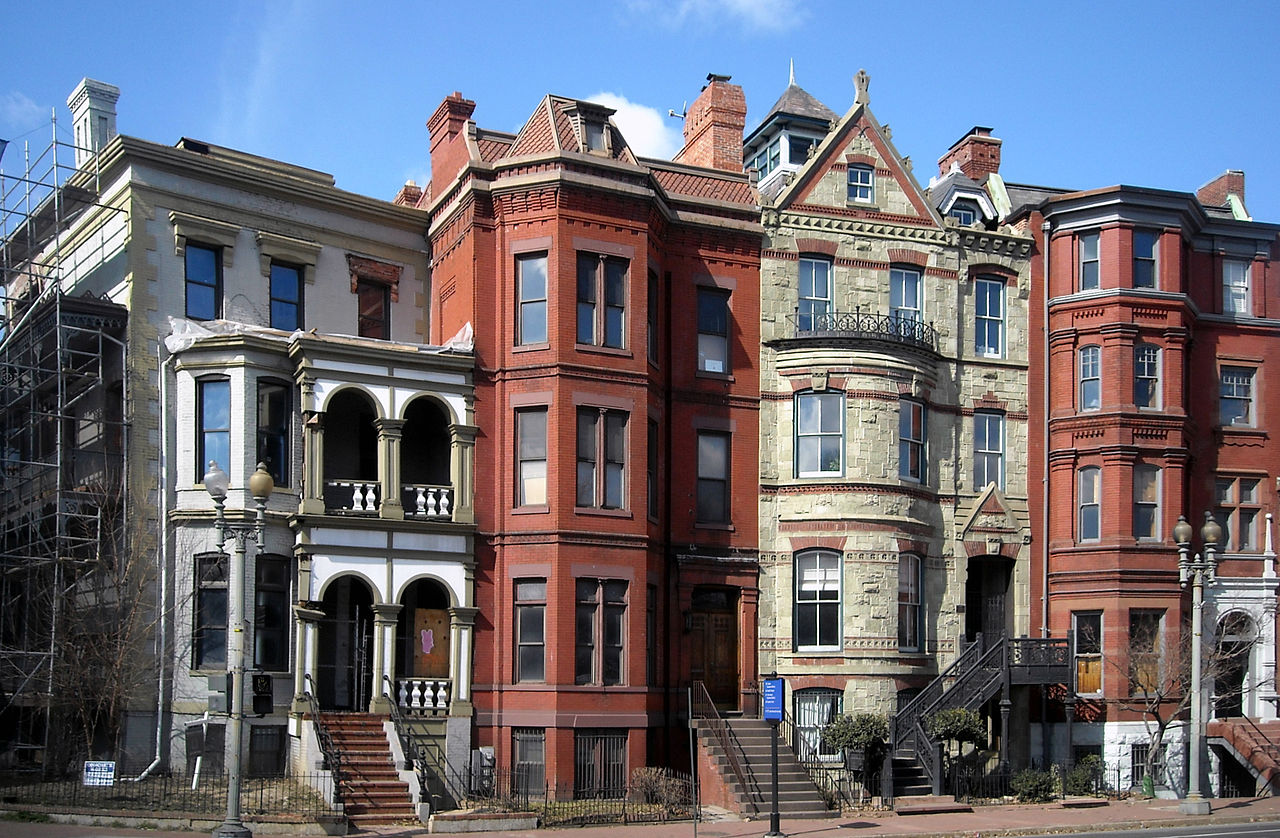
Washington, D.C., formally the District of Columbia and commonly referred to as Washington, "the District", or simply D.C., is the capital of the United States. On July 16, 1790, the United States Congress approved the creation of a federal district to become the national capital as permitted by the U.S. Constitution. The District is therefore not a part of any U.S. state. It was formed from land along the Potomac River donated by the states of Maryland and Virginia; however, the Virginia portion was returned by Congress in 1846.

A new capital city named after George Washington was founded in 1791 to the east of the preexisting port of Georgetown. Congress consolidated the City of Washington, Georgetown, and the remaining unincorporated area within the District under a single municipal government in 1871. The city shares its name with the U.S. state of Washington, located on the country's Pacific coast.

Washington, D.C., had an estimated population of 617,996 in 2011. The city was the 24th most populous place in the United States as of 2010. Commuters from the surrounding Maryland and Virginia suburbs raise the city's population to over one million during the workweek. The Washington Metropolitan Area, of which the District is a part, has a population of nearly 5.6 million, the seventh-largest metropolitan area in the country.

The centers of all three branches of the federal government of the United States are located in the District, as are many of the nation's monuments and museums. Washington, D.C., hosts 176 foreign embassies as well as the headquarters of the World Bank, the International Monetary Fund (IMF), the Organization of American States (OAS), the Inter-American Development Bank, and the Pan American Health Organization (PAHO). The headquarters of many other institutions such as trade unions, non-profit organizations, lobbying groups, and professional associations are also located in the city.

Images: